
At Relational Ground, Dominick explores how men’s health, relationships, and societal change intersect through stories, research, and global perspectives. This work examines how cultural norms and systemic barriers shape men’s experiences with reproductive health, family planning, and emotional well-being. From global fertility trends to fathers’ roles in sexual health and the NFL’s platform for men’s health, Relational Ground challenges outdated narratives and offers practical solutions. Its relational approach emphasizes connection—between partners, families, communities, and health systems—as a catalyst for stronger public health and healthier lives. Click the link to visit the Relational Ground Substack. Exemplary blogs are shared below. 
The Collapse of Workplace Friendship
For many men, work quietly provided the conditions that made friendship possible: repeated interaction, shared purpose, and low-stakes proximity. As remote work, turnover, and hustle culture thin those conditions, connection doesn’t disappear overnight. It becomes harder to start and easier to lose. What we’re calling a loneliness crisis is, in part, the collapse of work as a place to belong.
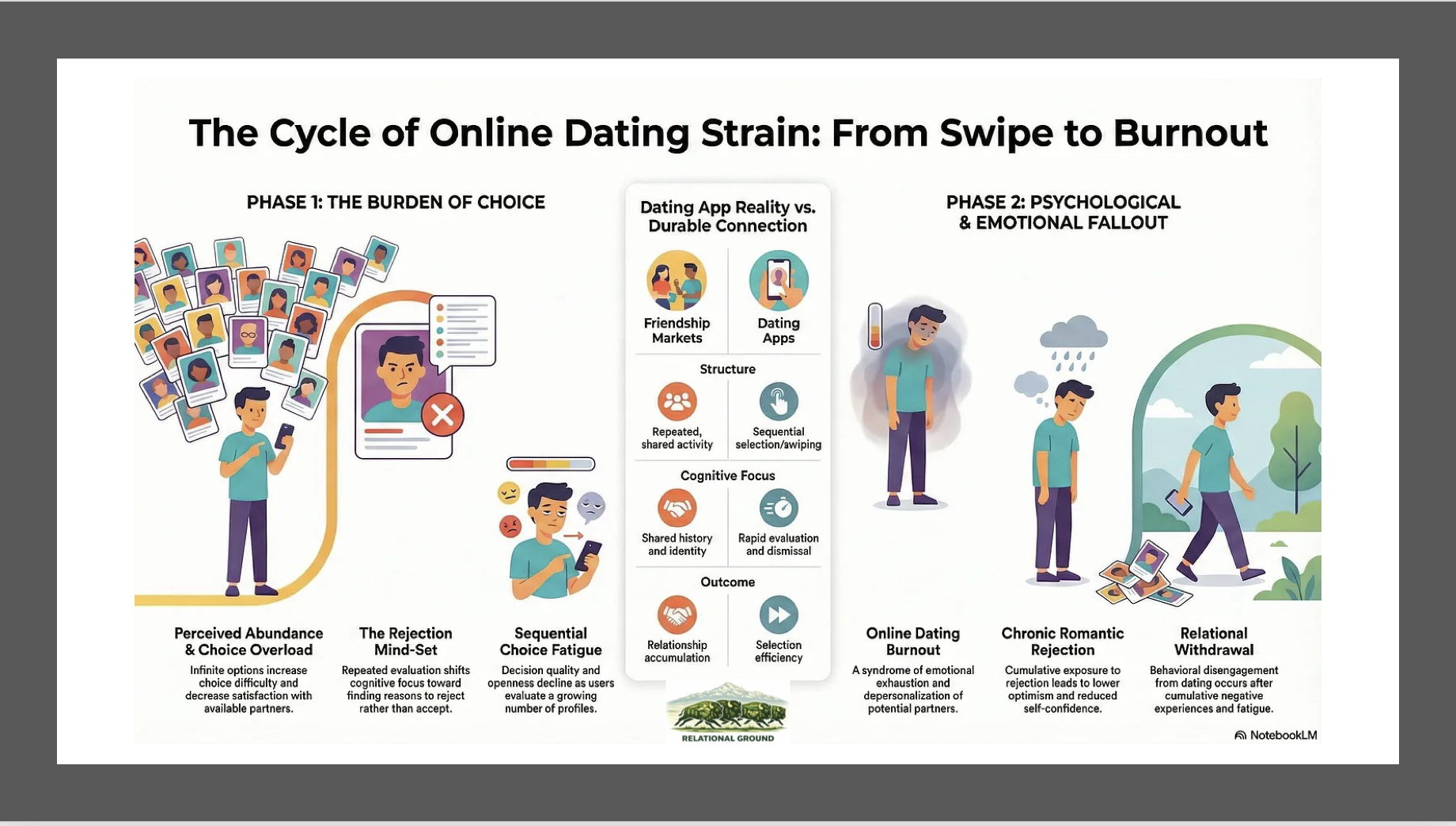
Swipe Fatigue and the Friendship Gap: Why Dating Apps Don’t Fix Men’s Loneliness
Dating apps are not failing because men are broken. They are failing because they are being asked to solve a problem they were never designed to address. Access without infrastructure does not produce connection. If we want to reduce men’s loneliness, we must rebuild the friendship markets that make durable relationships possible.