
At Relational Ground, Dominick explores how men’s health, relationships, and societal change intersect through stories, research, and global perspectives. This work examines how cultural norms and systemic barriers shape men’s experiences with reproductive health, family planning, and emotional well-being. From global fertility trends to fathers’ roles in sexual health and the NFL’s platform for men’s health, Relational Ground challenges outdated narratives and offers practical solutions. Its relational approach emphasizes connection—between partners, families, communities, and health systems—as a catalyst for stronger public health and healthier lives. Click the link to visit the Relational Ground Substack. Exemplary blogs are shared below. 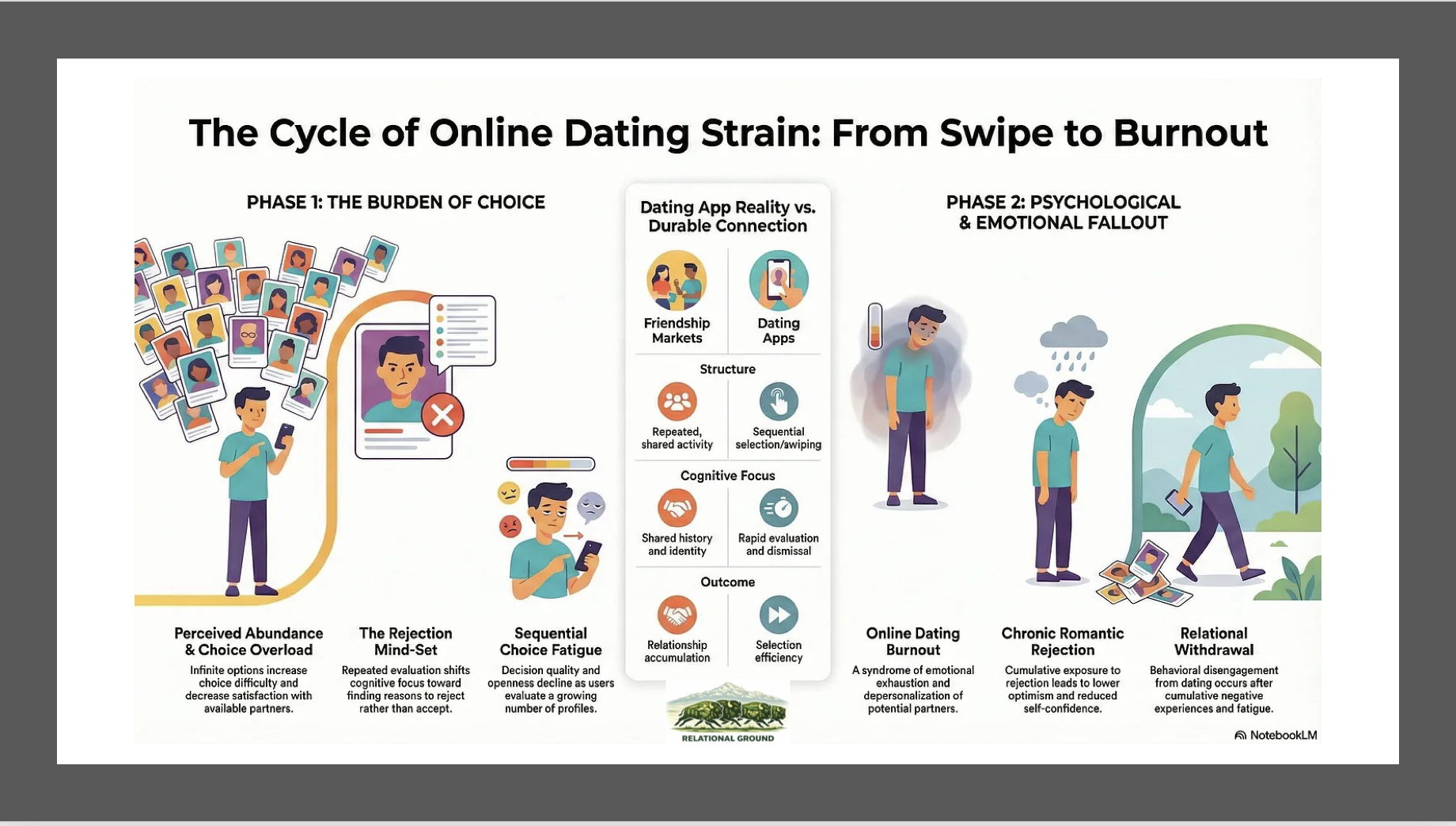
Swipe Fatigue and the Friendship Gap: Why Dating Apps Don’t Fix Men’s Loneliness
Dating apps are not failing because men are broken. They are failing because they are being asked to solve a problem they were never designed to address. Access without infrastructure does not produce connection. If we want to reduce men’s loneliness, we must rebuild the friendship markets that make durable relationships possible.

Relational Masculinity in Public
Taken together, Talarico models a form of masculinity that is accountable rather than authoritarian, humble rather than domineering, and rooted in relationship rather than fear. What makes this posture especially relevant is not its theological specificity or political context, but its implications for men’s health and belonging.

Individualism Under Constraint
Childlessness in the United States is increasingly common, but rarely experienced the same way. Drawing on national surveys, demographic research, and studies of permanent contraception, this essay examines how Americans are navigating fertility, identity, and permanence in an era shaped by economic insecurity, delayed independence, and policy uncertainty.
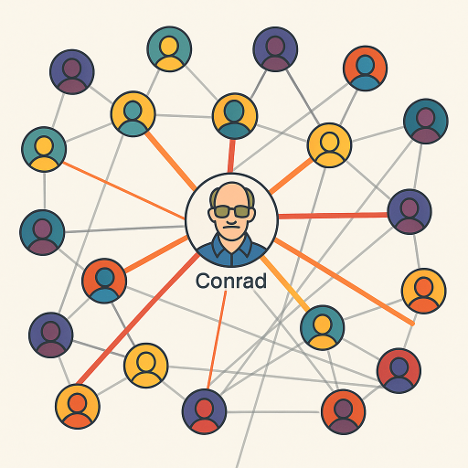
Being Conrad!
The people we grow closest to are often those we encounter repeatedly, in spaces where familiarity builds and trust grows. Proximity shapes who we connect with and how these relationships develop over time—especially for men, who often have fewer close friendships as they age.