Reclaiming the Scroll
Social Media Transparency as a Path to Relational Health
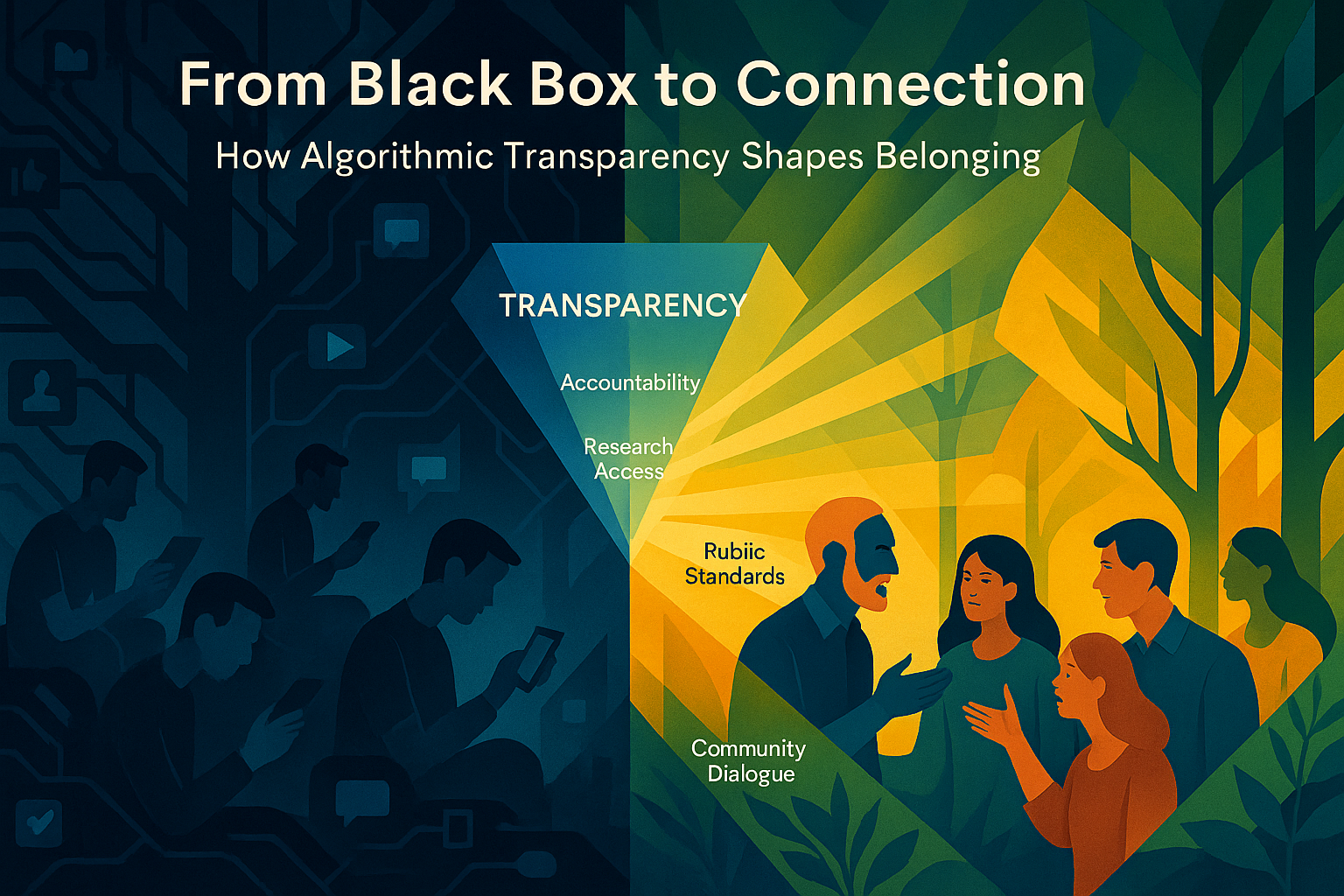
AI generated image based on content of blog. Incorrect spelling included for transparency. :)
Algorithmic opacity isn’t just about code; it’s about people. For years, I’ve watched how the algorithms behind social media platforms quietly shape men’s sense of self, belonging, and wellbeing. When a young man opens YouTube or TikTok, he’s not just scrolling; he’s being socialized. A few seconds of curiosity about fitness, politics, or dating can become a stream of outrage and hypermasculinity. The result is what many call the manosphere, a digital echo chamber that teaches boys and men to mistrust, compete, and disconnect.
This recent interactive article, Money Muscles, and Anxiety: Why the manosphere clicked with young men, describes what begins as entertainment quickly becomes isolation. These algorithmic feeds reward antagonism over empathy, performance over reflection, and consumption over connection. In my work with men in health programs around the world (and in my own life), I’ve seen how this digital conditioning mirrors deeper cultural disconnection, one that encourages men to appear strong rather than to seek support. One perspective on the manosphere is that it’s not only filling a gap for young men as a “community”; it’s a design effect, engineered by attention-driven systems that thrive on division.
The Transparency Gap
Despite the power these systems wield, people outside of the industry know remarkably little about how they work. Researchers and journalists trying to study recommendation engines often face legal threats or platform bans. Tech companies argue that their systems are too complex or proprietary to reveal, but the consequences of secrecy are public: shaping trust, belief, and democratic discourse.
That’s why algorithmic transparency isn’t a niche technical issue; it’s a public health issue. The content we see, the outrage that keeps us scrolling, and the reinforcement of identity-based narratives all operate inside a black box. Without establishing systems in which every understands the mechanics of social media (and other) algorithms, we are under-informed consumers. The food we eat must list its ingredients, the drugs we take should follow appropriate approval procedures, but these algorithms feed us with content that shapes our social, emotional, and physical lives without any oversight.
Opening the Black Box
Fortunately, a growing movement is fighting to open that box:
AlgorithmWatch (EU) a non-governmental, non-profit organization based in Berlin and Zurich. We fight for a world where algorithms and Artificial Intelligence (AI) do not weaken justice, human rights, democracy, and sustainability but strengthen them. (https://algorithmwatch.org)
Mozilla’s Foundation mission is to unlock healthy data practices at scale. We understand the challenges and opportunities of a data-driven internet requires global solutions.. (https://www.mozillafoundation.org/en/)
Ranking Digital Rights publishes an annual index grading tech companies on their transparency and accountability. (https://rankingdigitalrights.org)
The Integrity Institute, led by former platform insiders, creates practical frameworks for meaningful transparency in corporate practice. (https://integrityinstitute.org)
Access Now advocates for digital rights and legal protections for those researching algorithms and their impact. (https://www.accessnow.org)
The Knight First Amendment Institute defends the right of researchers and journalists to study platforms without retaliation. (https://knightcolumbia.org)
On the policy side, the EU’s Digital Services Act (DSA) sets a global standard, requiring major platforms to publish risk assessments, open data to vetted researchers, and disclose recommender-system logic. (https://digital-strategy.ec.europa.eu/en/policies/digital-services-act-package) In the U.S., the proposed Platform Accountability and Transparency Act (PATA) would create a similar model under FTC and NSF oversight. (https://www.congress.gov/bill/117th-congress/senate-bill/5339)
These aren’t just bureaucratic fixes; they’re structural reforms that let us study how algorithms shape mental health, relationships, and democracy itself. Yet, algorithmic transparency is only one component of a larger strategy to address the harms of social media on men and boys (and women & girls). It must work in concert with broader efforts that include relational education, mentorship, peer-led dialogue, and the promotion of digital literacy and emotional wellbeing.
AI generated image based on blog content. I promote stronger friendships, but the two guys with hands on each others’ shoulders is a strange embrace.
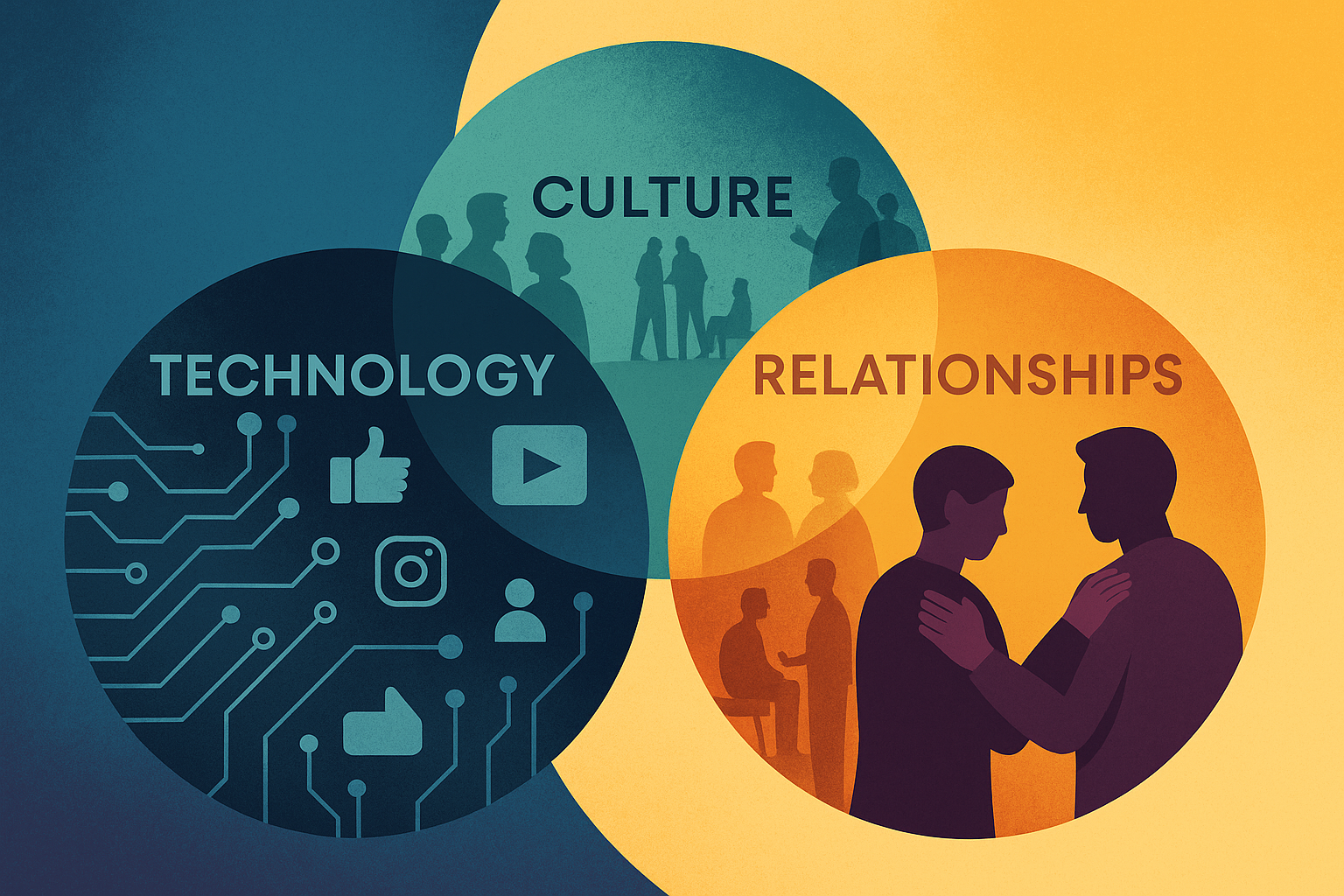
AI generated image based on blog content. I promote stronger friendships, but the two guys with hands on each others’ shoulders is a strange embrace.
Toward Relational Transparency
Transparency alone won’t heal the social fractures these systems exploit. But it’s a first step toward designing digital spaces that reflect, not distort, our shared relational values. Civil-society frameworks like the Santa Clara Principles (https://santaclaraprinciples.org) and the OECD AI Standards (https://oecd.ai/en/ai-principles) show what meaningful openness looks like: explainable systems, accessible data, and clear accountability. When combined with community-level programs that foster dialogue, mentorship, and emotional literacy, these guidelines become tools for collective health.
While this began as a men’s issue, it’s really about all of us. The same opaque mechanisms that feed young men outrage also shape how women, families, and entire communities see themselves. The same algorithmic nudges that isolate boys from belonging also polarize civic discourse and weaken empathy across society.
Transparency is, in essence, relational; it allows us to see one another clearly. By demanding visibility into how our digital ecosystems operate, we reclaim agency over the stories that define who we are. The manosphere may have captured attention, but attention can be redirected and our collective health depends on it.
