Friendship Markets and the Quiet Crisis of Men’s Connection
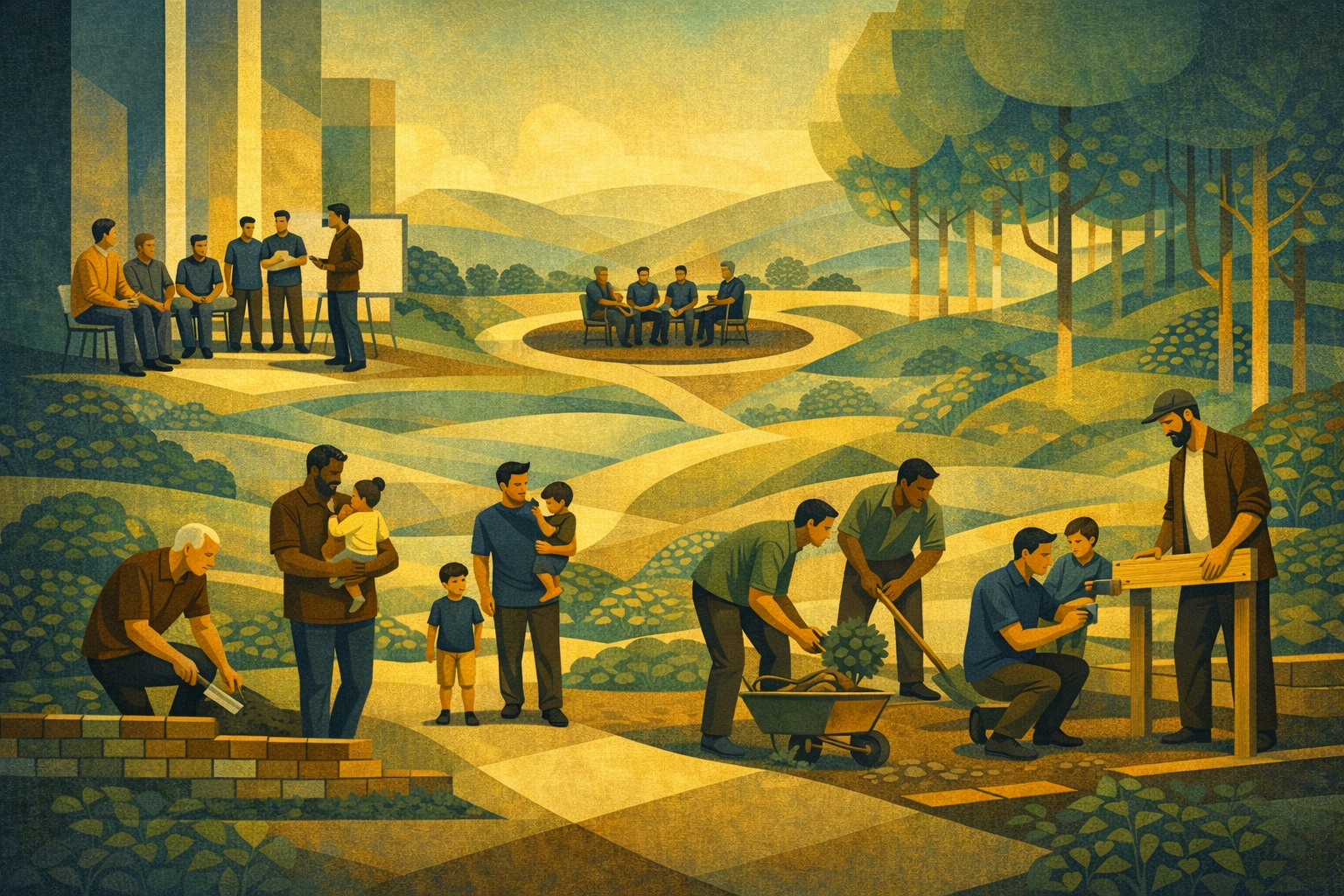
A field-building lens on men’s social connection, and what it implies for institutions, intermediaries, and community-based providers.
A lot of men I talk to say the same thing, usually with a shrug:
“I don’t really make new friends anymore.”
It’s often framed as a personal shortcoming: too busy, too awkward, too tired, too late in life. Somewhere along the way, many men internalize the idea that friendship is something you either “have” or you don’t — and if you don’t, that says something about you.
But what if the problem isn’t the man?
What if it’s the market?
Friendship markets
A recent New York Times essay by Janice McCabe introduced a useful concept: friendship markets. The idea is simple but powerful. At certain points in life, we find ourselves in environments where many people are actively open to forming new relationships. Together, we are “in the market” for friendship. At other times, we’re surrounded by people who may be pleasant, polite, even warm, but fundamentally unavailable for deeper connection.
In strong friendship markets, connection is expected. Think of the first weeks of college, a new military unit, a cohort-based training program, or a support group formed around a shared life disruption. In weak or closed markets, people are friendly without being open. Conversations happen, but they don’t go anywhere.
Many adult men are trying to make friends in closed markets, and blaming themselves when it doesn’t work.
For individuals building interventions for men, this is a useful reframe: weak connection is not only an individual behavior issue; it’s often an ecosystem and design issue.
Why friendship markets collapse for men
For boys and young men, friendship is often structured for them. School, sports, dorms, and jobs with shared schedules — proximity does much of the work. But as adulthood progresses, those structures thin out.
Men are especially vulnerable to this collapse for a few reasons:
Workplaces prioritize productivity, not connection. Colleagues may be cordial but cautious.
Coupling and parenthood redirect social energy inward. Friendships become secondary or purely instrumental.
Masculine norms discourage overt bids for closeness. Many men fear seeming needy, awkward, or intrusive.
Few socially sanctioned “on-ramps.” There are limited spaces where men can openly say, “I’m here to connect.”
So men keep showing up to gyms, offices, school events, or neighborhood gatherings where conversation is allowed — but deeper connection is rarely reciprocated. The market is closed.
Friendship follows identity, not just activity
One of the most important insights in the friendship market idea is this:
People don’t make friends just by doing things together. They make friends while experiencing life together.
Based on Ms. McCabe’s article, friendship markets open when identities are shifting.
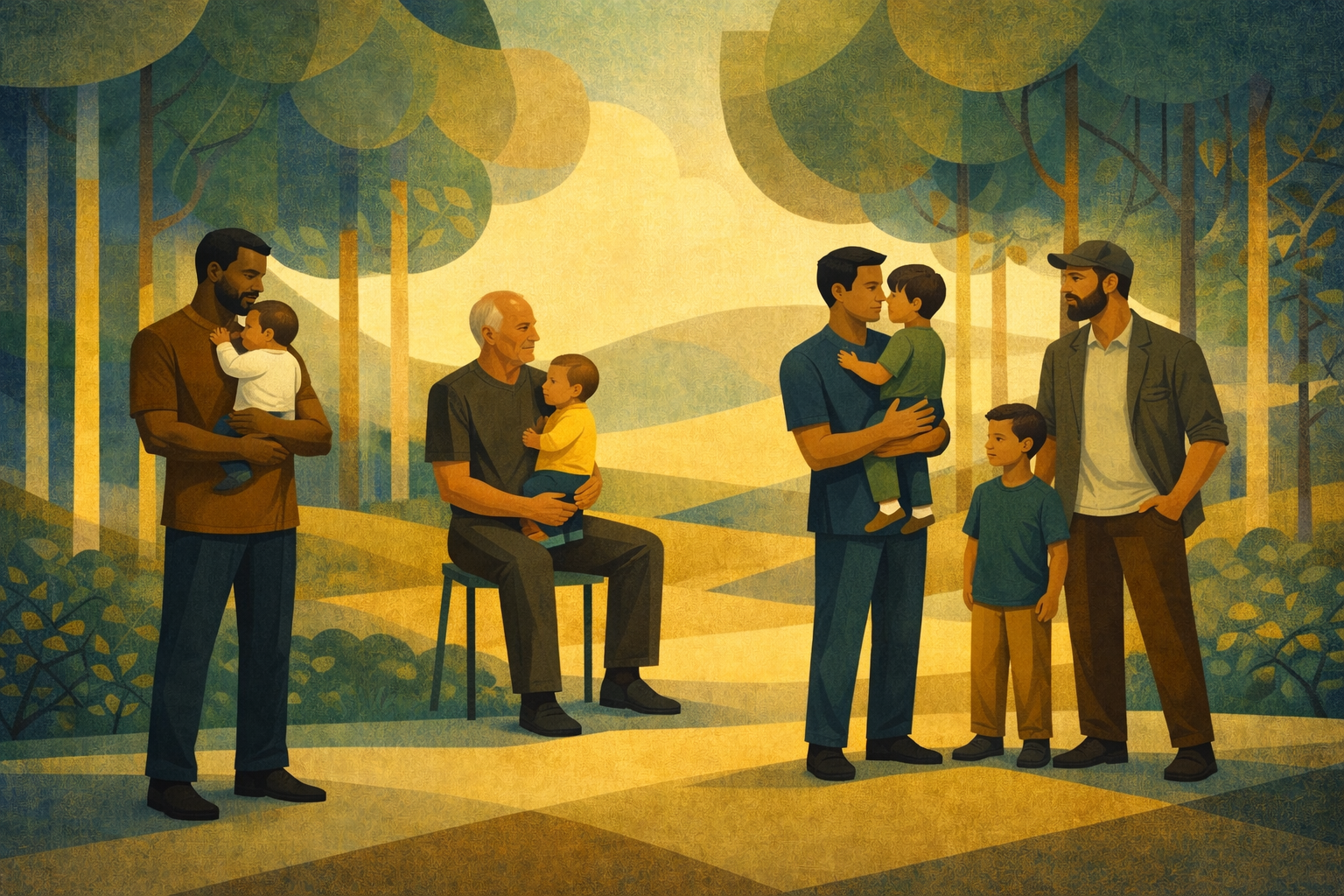
That’s why friendships form more easily around life transitions: becoming a parent, starting recovery, immigrating, retiring, changing careers, coming out, or confronting loss. These moments loosen existing identities and create demand for new relational mirrors.
This matters for men because many are socialized to anchor identity in stability (expectations related to: provider, professional, partner) rather than growth or exploration. When identity is fixed, the market stagnates.
Men are often told to “join a club” or “pick up a hobby,” but activity alone is rarely enough. The activity has to be tied to an emerging sense of self:
A father’s group when you’re learning how to be a dad
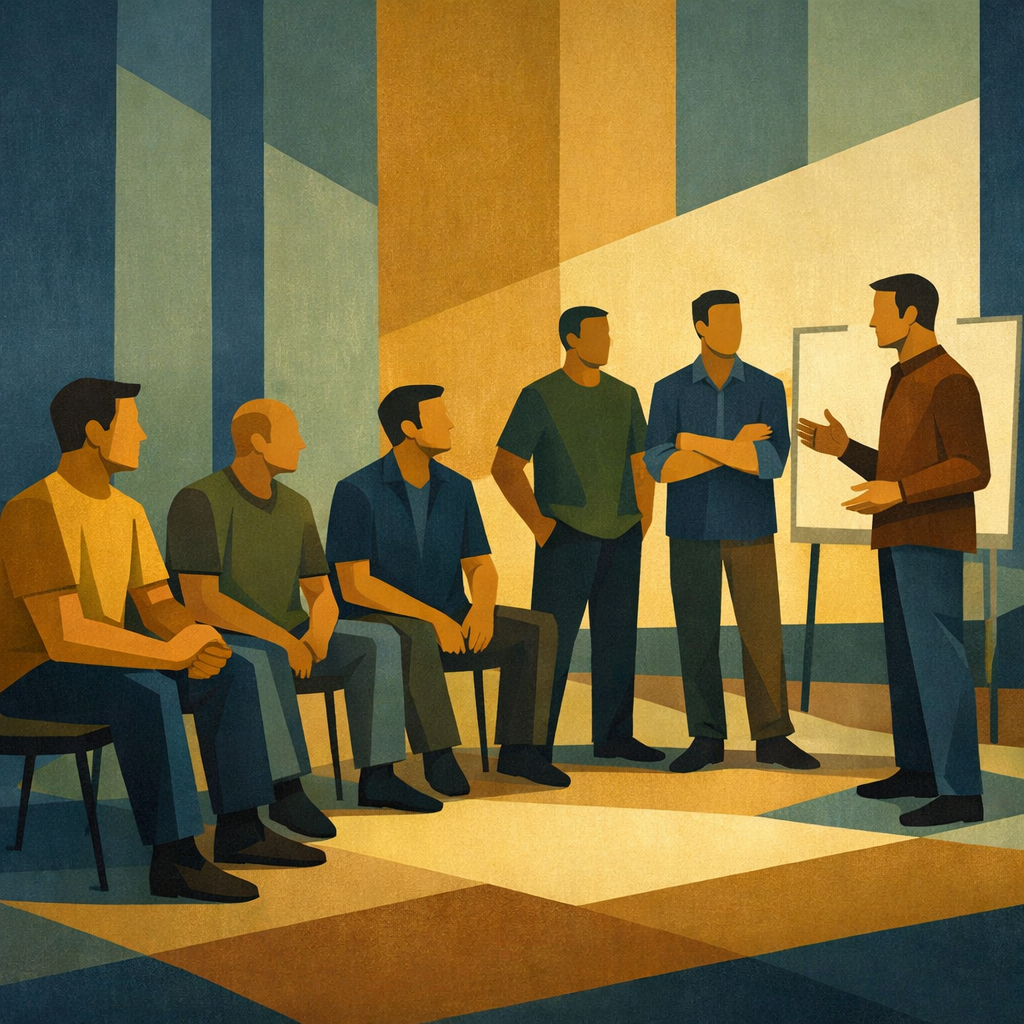
A men’s circle when you’re rethinking masculinity
A training cohort when your body and priorities are changing
A faith, service, or advocacy space when values are being renegotiated
Friendships formed in these spaces aren’t transactional, but they are timely. They meet men at a moments of transition.
The cost of closed markets
When men can’t access viable friendship markets, the consequences show up quietly:
Fewer people to call during stress
Less emotional processing outside intimate partners
Increased reliance on work, alcohol, or isolation
Higher vulnerability during major disruptions (e.g., divorce, illness, job loss, grief)
This is not just a social issue. It’s a public health one. Social isolation and weak relational ties are consistently linked to poorer mental health, higher cardiovascular risk, and shorter life expectancy.
And yet, men are implicitly and explicitly told to handle it on their own.
What this means for men’s friendship markets
If you’re working in the men-and-boys ecosystem (e.g., fatherhood, mentoring, reentry, mental health, violence prevention, healthy masculinity, workforce, faith, sports) the “friendship market” frame offers a practical design question:
Where, in your local ecosystem, are men actually in the market for connection, and what structures make it easy to say yes?
After some middle schoolesque jokes about this “market”, a few field-building implications follow.
1) Treat connection as infrastructure, not a soft outcome
Many programs aim at skills, communication, employment, parenting, recovery, or behavior change and hope “social support” emerges as a byproduct.
But markets don’t open by accident. If connection is a desired outcome, it needs intentional scaffolding: repeated contact, small-group formats, mutual obligation, and clear norms about reaching out.
2) Build around transition points, not “general community”
Open markets cluster around life transitions. Field builders can focus on institutional touchpoints where men’s identities are already in motion:
New fathers (prenatal to early childhood)
Reentry and diversion pathways
Recovery and relapse prevention
Career change, layoffs, and workforce upskilling
Divorce/separation and custody navigation
Immigration and resettlement
Grief, caregiving, and health shocks
These are not only “service moments.” They are high-demand moments for belonging.
3) Create socially legitimate on-ramps
Men often avoid spaces that feel like they require emotional fluency at the door. Programs can lower the barrier by offering dignified entry stories:
“This is a training group.”
“This is a fatherhood skill cohort.”
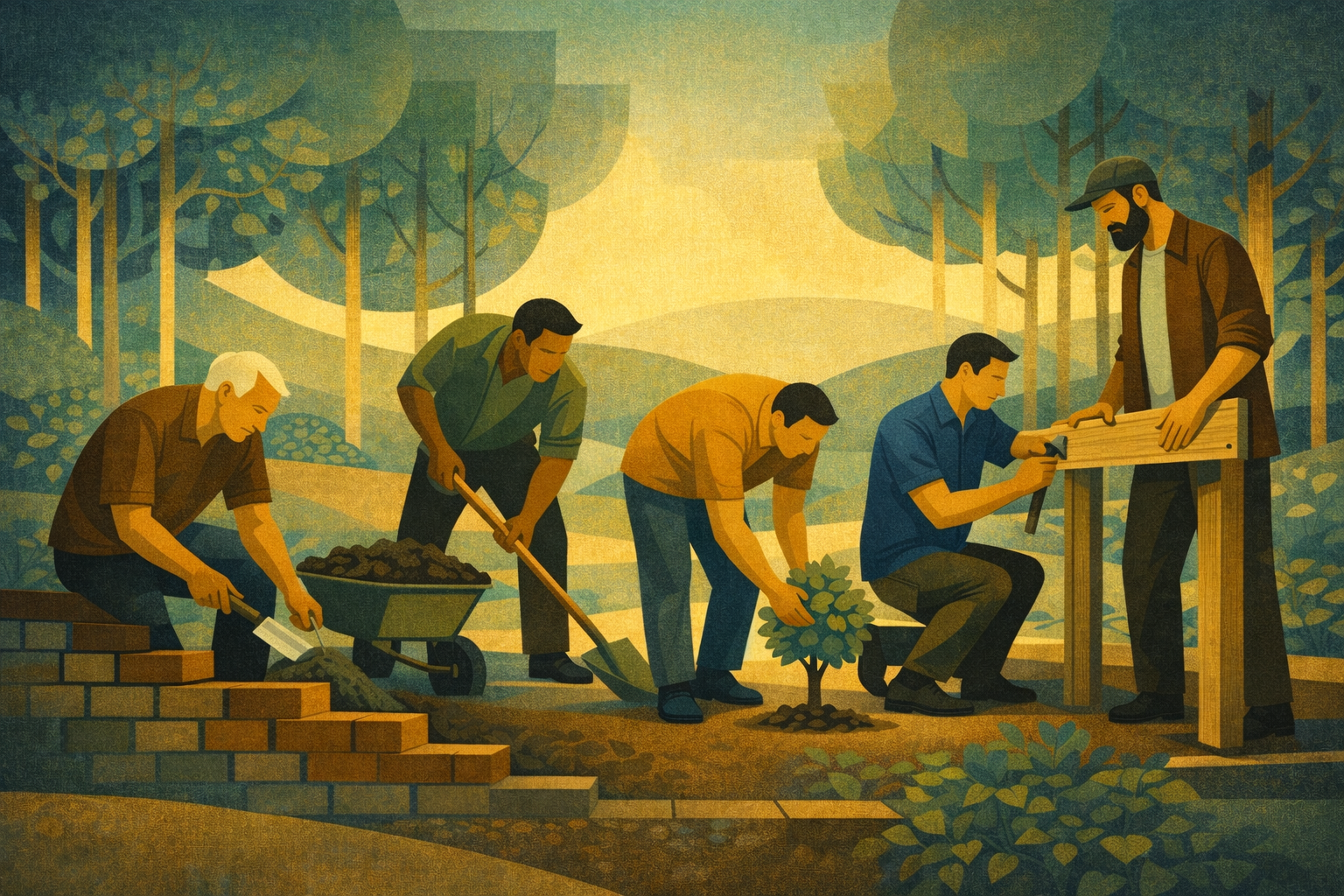
“This is a service team.”
“This is a recovery circle.”
The invitation matters. It tells men, you belong here, and you don’t need to perform.
4) Measure what the market is producing
If the intervention is “market design,” evaluation can look beyond attendance:
Do participants exchange contact information?
Do they meet outside the program?
Do they report having someone to call?
Do ties persist 3–6 months later?
These aren’t perfect measures, but they move the work from vibes to visibility.
5) Invest in the intermediaries that make markets repeatable
Strong markets are often cohort-based and facilitated. That suggests a field-building priority: train and support facilitators who can hold group norms, manage conflict, and cultivate reciprocity — especially in communities where trust is thin.
A different resolution for 2026
Instead of resolving to “put yourself out there,” a more realistic and humane goal is this:
Look for places where you are changing, and connect there.
Not where you already feel complete. Not where everyone else already has their people. But where you are learning, adapting, stretching, or rebuilding.
That might mean:
Choosing environments organized around transition, not status
Being honest (with yourself and others) about where you are unfinished
Accepting that friendship requires structure, not just effort
Letting go of the idea that struggle with friendship is a personal failure
Friendship markets don’t open by accident. They are shaped by institutions, norms, timing, and identity. When men understand that, the shame lifts — and the search becomes more strategic, more relational, and more hopeful.
The work is not to become more likable.
The work is to find — or help build — the right market.
